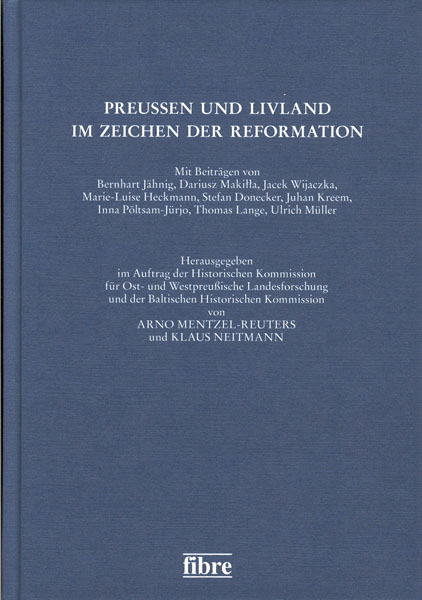
Preußen und Livland im Zeichen der Reformation
Prussia and Livonia (now Estonia and Latvia) were among the first regions in Europe to be touched by the spark of the Reformation that had spread from Wittenberg, as early as 1522/23, and which turned to the new doctrine following Martin Luther’s break with the papacy. Luther was astonished and delighted by the rapid spread of his preaching there: “And behold the wonders: the Gospel is rushing towards Prussia at full speed and with full sails. The Gospel is taking root and spreading in Livonia; so marvellous is Christ.”
The comparison shows, of course, that the Reformation penetrated and took hold in the two countries on the eastern and south-eastern shores of the Baltic Sea under very different constitutional and political conditions. In Prussia, the sovereign, the Grand Master of the Teutonic Order and his clerical body, and the bishops relinquished their previous ecclesiastical status and, in agreement with the nobility and the towns, joined the Reformation within three years following a swift decision-making process. The State of the Teutonic Order was transformed into a secular Protestant duchy, creating the first Protestant territory with its own regional Protestant church in the German-speaking world. In Livonia, the major cities with Reformation leanings, led by Riga and Reval (Tallinn), met with resistance from the ecclesiastical rulers, the Teutonic Order, the Archbishop of Riga and the four bishops, who had no intention of relinquishing their rule. For decades, traditionalist and Reformation circles fought tenaciously against one another at the general provincial diets and within the individual territories, until the adherents of the new faith had gained general acceptance for their Protestant views. The emergence and spread of Luther’s teachings confronted rulers, estates and subjects with the question of their fundamental stance in the face of the impending schism in the Church.
The ten essays in this volume examine how Prussia and Livonia behaved during this period of upheaval from the 1520s to the 1560s, how they responded to the ecclesiastical challenge, what considerations guided them in doing so, and how this led to the emergence of a new ecclesiastical and secular order under Protestant auspices.
Solivagus-Praeteritum
1. Auflage. Hardcover, Fadenheftung, 367 Seiten. Format: 172 x 238 mm.
Erscheinungsjahr: 2014
Available in 2 to 4 working days.
Delivery within Germany is free of charge.
For deliveries within and out of the EU, we charge the shipping costs incurred.